Prohibited Goods & Required Import Permit to Indonesia 2026
Complete list of goods that are prohibited from importing into Indonesia and that require BPOM, SDPPI, SNI or quarantine permits, plus examples of compliance costs and a safety checklist.

Goods imported into Indonesia are divided into three statuses: free to import, restricted or permit required, and totally prohibited. What is absolutely prohibited includes narcotics and their precursors, firearms and ammunition, explosives, pornographic material, counterfeit money, CITES protected animals and plants, hazardous and toxic waste, and used clothing. Meanwhile, medicines, supplements, cosmetics, processed food, medical devices, telecommunications equipment, SNI mandatory products, as well as animals and plants may be imported as long as they have permission from the relevant agencies.
Understanding the status of goods before ordering is much cheaper than dealing with it after the goods are stuck at the port. This article summarizes the categories you need to recognize, which agencies issue permits, examples of compliance cost calculations, and a practical checklist before hitting the buy button.
Important note: Indonesian import regulations change quite frequently through ministerial regulations and institutional regulations. The information below is a general planning overview, not legal advice. Always confirm the latest status of your goods with the relevant agency or our team before making a purchase.
Categories of Goods Prohibited from Import
This group cannot be imported with any permit for general purposes. Sending it risks confiscation and legal proceedings.
| Category | Example | Relevant agencies |
|---|---|---|
| Narcotics, psychotropics and precursors | Prohibited substances and the chemicals they are made from | BNN, Police, Ministry of Health |
| Certain firearms, ammunition and edged weapons | Gun, bullets, gun components | Indonesian Police |
| Explosives | Commercial and military explosives | Indonesian Police, Ministry of Defense |
| Pornographic material | Print and digital media | Prosecutor's Office, Komdigi |
| Counterfeit money and printing equipment | Counterfeit banknotes, printing plates | Bank Indonesia, Police |
| Protected animals and plants (CITES) | Ivory, rare reptile skin, rare plants | KLHK, Conservation Center |
| Hazardous and toxic waste (B3) | E-waste and toxic chemicals | KLHK |
| Used clothing and certain used items | Imported used clothes (ballpress) | Ministry of Trade |
| IPR violation goods | Counterfeit products or imitations of registered brands | DJKI, Indonesian Police |
| Substances that destroy the ozone layer | Certain types of refrigerant | KLHK, Ministry of Trade |
Goods that may be imported but require a permit
This group is often called lartas, an abbreviation for prohibitions and restrictions. The goods are legal, but require approval or recommendation before entry.
| Types of goods | Institution | General documents requested |
|---|---|---|
| Medication, traditional medicine, health supplements | BPOM | Distribution permit and Import Certificate |
| Cosmetics and skincare | BPOM | Cosmetic and SKI notifications |
| Processed food, packaged drinks | BPOM | MD/ML and SKI distribution permits |
| Medical equipment and PKRT | Ministry of Health | Distribution permit for medical devices or special permit |
| Telecommunications and wireless devices | SDPPI, Komdigi | Telecommunications equipment certificate |
| Mobile phones and tablets | Ministry of Industry and Komdigi | IMEI registration |
| SNI mandatory products | BSN, Ministry of Industry, Ministry of Trade | SPPT-SNI and Goods Registration Number |
| Animals, plants, seeds, agricultural products | Indonesian Quarantine Agency, Ministry of Agriculture | Quarantine certificate and import recommendation |
| Alcoholic beverages | Ministry of Trade | Registered importer status and special permits |
| Chemicals and hazardous materials | Ministry of Trade, Ministry of Environment and Forestry | Import approval and MSDS |
| Textiles, steel, certain electronics | Ministry of Trade | Import Approval and Surveyor Report |
| Used goods and not new machines | Ministry of Trade | Special Import Approval |
Highlights: Drugs, Supplements, Cosmetics, and Food
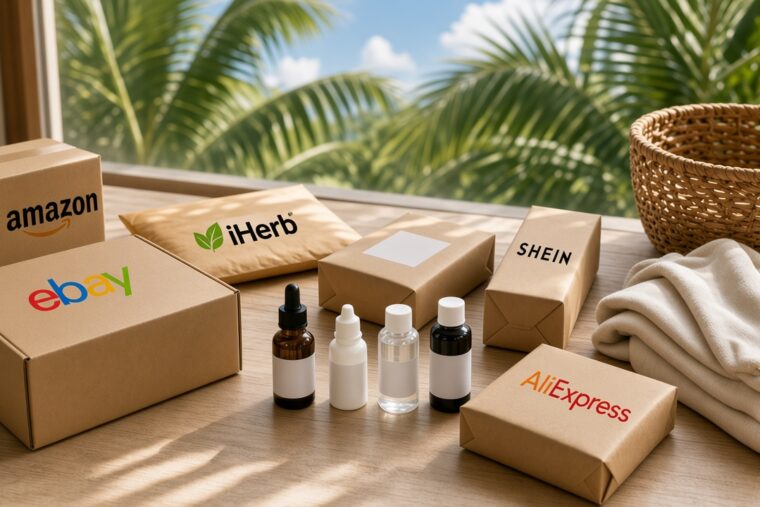
This is the category that most often gets shipments held up, especially orders from iHerb, Amazon, or Japanese and Korean stores. All medicinal products, traditional medicines, health supplements, cosmetics and processed food are under the supervision of BPOM.
To be traded, products must have a distribution permit or notification in the name of the owner or official importer, plus an Import Certificate for each entry. For personal use, BPOM regulates exceptions with a limited number per product type. The exact limits are regulated in BPOM regulations and may change, so confirm first before ordering large quantities. Hard drugs generally require a doctor's prescription and cannot be imported freely under any circumstances.
Highlights: Telecommunications and Wireless Devices
Every device that emits radio signals, from WiFi routers, walkie-talkies, drones, Bluetooth devices, to IoT modules, requires SDPPI certification in order to be traded and used in Indonesia. The aim is to ensure that the frequency used does not interfere with other services, because the frequency allocation for each country is different.
Especially for mobile phones and tablets, there is an IMEI registration obligation. Devices whose IMEI is not registered will lose access to the Indonesian cellular network even if they physically reach your hands. There is a registration quota for passenger luggage, and units outside this quota require a paid registration process with separate handling fees.
Highlights: SNI Mandatory Products
A number of products may only be traded in Indonesia if they meet Indonesian National Standards, including children's toys, helmets, tires, electrical cables, steel products, bottled drinking water and some electronic equipment. This obligation applies to goods that are traded, and fulfillment requires laboratory testing, issuance of SPPT-SNI, and registration of item numbers.
Highlights: Animals, Plants, and Agricultural Products
All live animals, plants, seeds, seedlings, animal products and plant products must undergo quarantine inspection. The goal is to prevent the entry of pests and diseases. Some commodities also require recommendations from the Ministry of Agriculture and import approval from the Ministry of Trade. Raw coffee beans, honey, cheese, meat and ornamental plants are among those that are often detained because the sender does not prepare a quarantine certificate from the country of origin.
Highlights: Lithium Batteries and Dangerous Goods
Lithium batteries, power banks, aerosols, perfume, paint, gas lighters and flammable liquids are classified as dangerous goods in aviation. Transport is strictly regulated and requires documents such as MSDS and test certificates, with special packaging and labeling. Many cargo airlines reject lithium batteries that are shipped separately from the device. If possible, choose a product variant where the battery is already installed in the device, or send by sea where the rules are more relaxed for some commodities.
Calculation Example: Compliance Costs for Mandatory SNI Toy Imports
Suppose you import 300 pcs of educational toys from China to sell. Assuming goods price USD 2.400 with exchange rate USD 1 = Rp 16.200, LCL sea cargo 1.2 CBM with rate Rp 3.200.000/CBM, and insurance 0.5%. Because the value is above USD 1.500,, the shipment is processed via formal cargo channels so the handling costs follow the HS code classification of the goods. For this illustration the handling fee is assumed to be 24.85% of the shipment value, the amount that applies to importers with complete business identity.
| Component | Calculation | Value (Rp) |
|---|---|---|
| Price of goods | USD 2.400 x Rp 16.200 | 38,880,000 |
| LCL sea shipping | 1.2 CBM x Rp 3.200.000 | 3,840,000 |
| Insurance | 0.5% x Rp 38.880.000 | 194,400 |
| Shipment value (goods + postage + insurance) | The sum of the three lines above | 42,914,400 |
| Handling and entry fees | 24.85% x Rp 42.914.400 | 10,664,228 |
| SNI compliance costs (estimated) | Lab tests, SPPT-SNI, goods registration | 12,000,000 |
| Handling warehouse, documents and delivery | Estimate | 2,500,000 |
| Total landed cost | All components | 68,078,628 |
Verify the numbers:
- Submission value = 38,880,000 + 3,840,000 + 194,400 = Rp 42.914.400.
- Handling and entry processing fees = 24.85% x 42,914,400 = Rp 10.664.228.
- SNI compliance costs = Rp 12.000.000, includes laboratory tests, issuance of SPPT-SNI, and registration of item numbers.
- Handling warehouse, documents, and delivery to address = Rp 2.500.000.
- Total landed cost = 42,914,400 + 10,664,228 + 12,000,000 + 2,500,000 = Rp 68.078.628.
- Cost per unit = 68,078,628 / 300 = approximately Rp 226.929 per pcs.
What's interesting about this example: the SNI compliance costs of Rp 12 juta even exceed the entire cost of handling the shipment. However, this fee is generally one-off per model or brand, so the portion per unit decreases drastically on subsequent orders. Therefore, mandatory SNI products usually only make business sense in fairly large volumes. You can check sea and air shipping estimates on page shipping rates.
How to Check the Status of Goods Before Buying
There are several simple steps you can take yourself before sending money to a supplier:
- Determine the candidate HS code. A specific item description, for example "50W LED floodlight for industry" instead of simply "lamp", makes the classification much more accurate.
- Check the transit status on the HS code. The Indonesia National Single Window portal provides information on prohibitions and restrictions per item post.
- Identification of the permit issuing agency. One item may require more than one permit, for example electronic medical devices which require a Ministry of Health distribution permit as well as SDPPI certification.
- Ask for documents that the supplier can provide. Certificate of analysis, free sale certificate, quarantine certificate and test report are often requirements for obtaining permits in Indonesia.
- Confirm with the agency or forwarder. Due to changes in regulations, final verification is still required before the purchase is made.
Differences in Personal and Commercial Use Rules
Many readers ask why their friends can buy supplements from abroad without problems, while their own shipments are delayed. The answer usually lies in the intended use and quantity.
For personal use in reasonable quantities, a number of categories receive concessions because they are not circulating on the market. However, once the quantity shows indications of being traded, for example dozens of bottles of the same variant, the shipment will be treated as commercial goods and all distribution permit obligations will apply in full. Quantity limits for this personal category differ between product types and are regulated in each agency's regulations, so it is best to confirm this before ordering.
Consequences of Wrongful Declarations
Writing the contents or value of the package incorrectly is not a cheap shortcut. The risks include re-determining the value of the shipment along with administrative sanctions, long delays which result in warehouse accumulation costs, rejection and re-export with costs borne by the importer, destruction of goods, and even criminal proceedings for certain categories.
On the contrary, honest declarations and complete documents actually speed up the release of goods. Inbound inspections use a risk management approach: shipments with a consistent declaration history tend to be processed more quickly. Honesty here is not just a matter of compliance, but also an operational strategy that saves time and money.
Checklist Before Ordering Goods from Abroad
- Identify the category of goods and check whether they are included as lartas
- For body consumption products, confirm the BPOM distribution permit status
- For electronic devices, check the need for SDPPI certification or IMEI registration
- For products to be sold, check SNI obligations and Import Approval
- For biological products, prepare a quarantine certificate from the country of origin
- Request an MSDS for items containing batteries or liquids
- Make sure the invoice includes a description and actual value
- Calculate compliance costs as part of the cost price, not unexpected costs
- Confirm the latest regulations before making payments to suppliers
Not sure about the status of your goods? Ask First
Most of the import problems we handle stem from one simple thing: the goods were purchased before their regulatory status was checked. Even though this check only takes a few minutes and can save tens of millions of Rupiah in costs.
Send your product link, photo or item specifications to WhatsApp +62 821-2213-4474 or email halo@jastipali.com, or fill in jastip request form. The Jastip Ali team will help map the status of the goods, estimate the permits required, and compile the total import costs as one all-in price to your address. More about the scope of our work is on the page our import services.